Nazia Akhtar
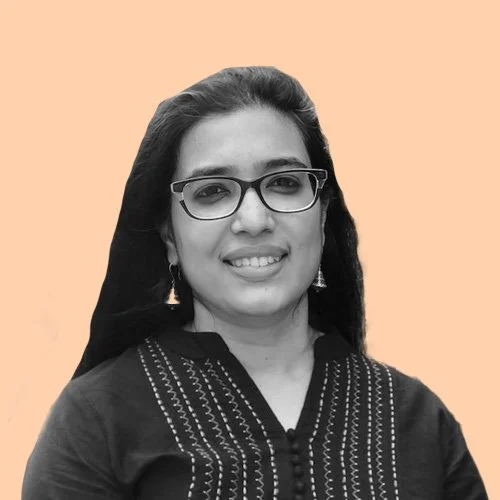
Nazia Akhtar is an Assistant Professor in the Human Sciences Research Centre at the International Institute of Information Technology, Hyderabad, where she teaches courses in Indian and Russian literatures.
NIF Books
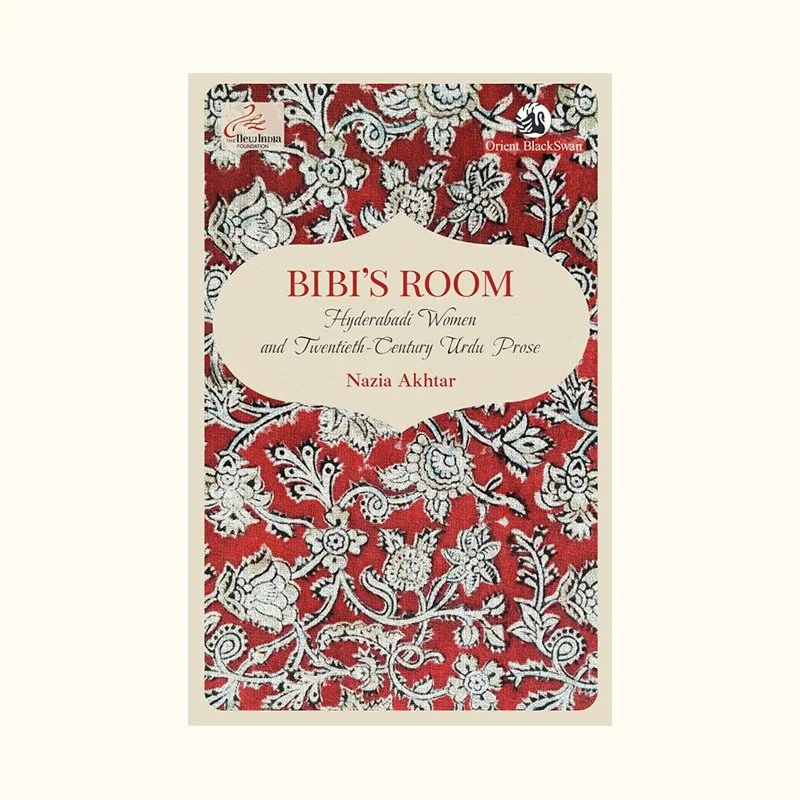
In addition to the general neglect of women writers, Urdu literary historiography in both English and Urdu has historically privileged north Indian and Pakistani writers while overlooking the many Urdus south of Bombay and Bhopal. Next to no work exists in English on the Urdu writers of Hyderabad, and only a handful of texts have been translated into English—an astonishing neglect, considering their contribution to the study of gender, political cultures, and regional histories.
Bibi’s Room studies the lives and work of three women writers from Hyderabad who wrote in Urdu: Zeenath Sajida, Najma Nikhat, and Jeelani Bano. It addresses the absence of scholarship on Hyderabadi women writers in three ways: representative translations; short, nuanced biographies; and critical analyses of their oeuvres—all framed against twentieth-century Hyderabadi history, politics, culture, and society.
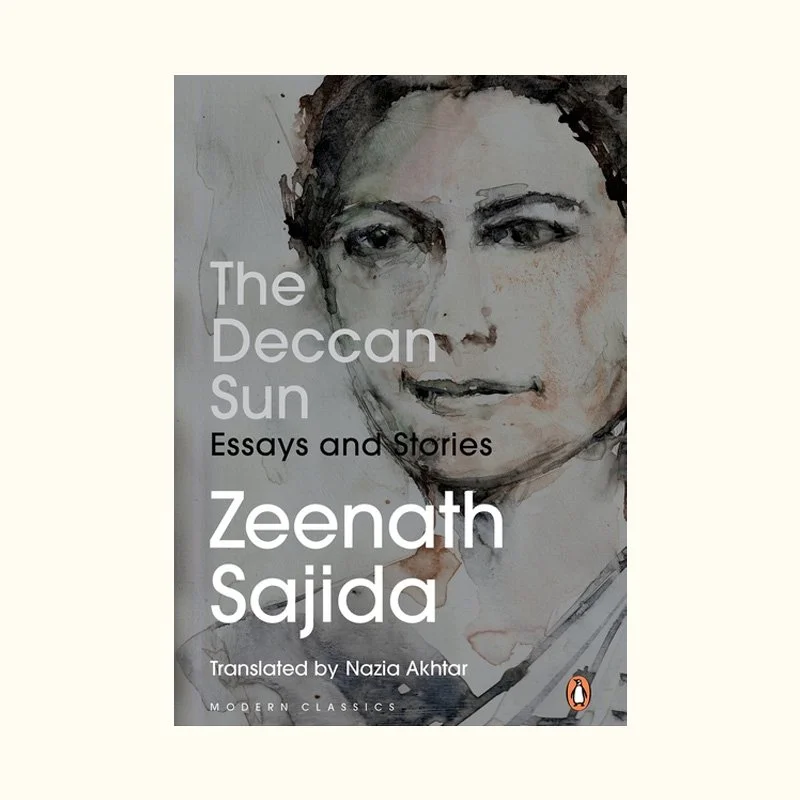
The three writers showcased here offer rich portrayals of Hyderabadi urban culture as well as critiques of gender and patriarchy. Zeenath Sajida’s insights into Islam dramatically alter what we know of Muslim women’s engagements with fundamental theological questions. Sajida is also a skilled proponent of Urdu humour and satire, a genre notorious for its exclusion of women writers. Jeelani Bano’s oeuvre, spanning three schools of Urdu literature, makes vital contributions to our understanding of gender, class, communalism, and national identity. Najma Nikhat’s deodi stories powerfully narrate women’s lives across class in feudal aristocratic homes, and their participation in revolutionary struggles like the Telangana movement.
The picture of Hyderabadi women’s lives that emerges generates new knowledge about the conditions in which women live, write, and resist, and expands our understanding of their public participation in South Asia. Bibi’s Room is also a welcome and valuable addition to studies of Urdu literature, South Asian feminism, translation, and the history and culture of Hyderabad.
Reviews:
“Bibi’s Room begins to fill some major gaps in the field by taking us south of the Vindhyas to Hyderabad and introducing three of the best-known Urdu women writers of the Deccan to a larger readership: Zeenath Sajida (1924–2009), Najma Nikhat (1936–1997) and Jeelani Bano (b.1936). The threads that tie their work together, Akhtar argues, are an immersion in the cultural milieu of Hyderabad, and their kinship with the ideas fostered by the Progressive Writer’s Movement.”- Shefali Jha, Indian Journal of Gender Studies
“Bibi’s Room: Hyderabadi Women and Twentieth-Century Urdu Prose by Nazia Akhtar (2022) focuses on three women writers in the unique sociopolitical backdrop of twentieth-century Hyderabad. The work is critical to the landscape of women’s writings in Urdu outside North India. It presents the writers beyond the categories of essentialized or romanticised Muslim women, focusing on their agency and positionality.”- Samia Khan, Journal of Urdu Studies
“Nazia Akhtar’s Bibi’s Room: Hyderabadi Women and TwentiethCentury Urdu Prose narrates the life histories and writings of three women writers of 20th-century Hyderabad—Zeenath Sajida, Najma Nikhat, and Jeelani Bano. Through a sensitive and careful translation of short stories, articles and diaries written in Urdu, Akhtar’s book analyses the perspective, opinion and emotions of Muslim women amid the sociopolitical transition in the princely state of Hyderabad.”- Ufaque Paiker, Economic and Political Weekly
“This book argues that there has been a lack of scholarship on Hyderabadi women writers in Urdu because of the predominant focus on north India and Pakistan, and explores the lives and writing of Zeenath Sajida, Najma Nikhat and Jeelani Bano through critical readings of their work against the political and social context of the time.”- Caravan
Other books by this author: