
Deepak Malghan
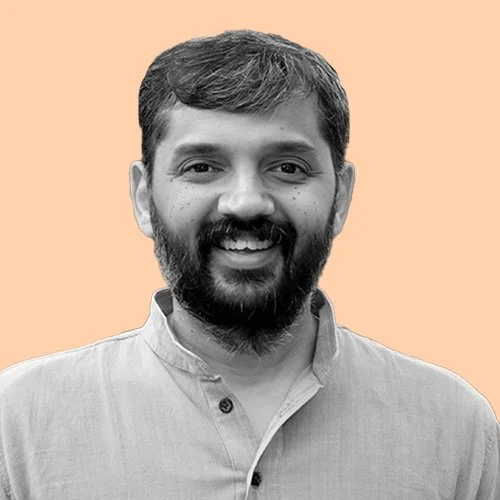
Deepak Malghan is a chemical engineer and an ecological economist working at the interface of scale theory and thermodynamics. Among other recognitions for his contributions to scale theory, Malghan received the 2015 VKRV Rao Prize in Social Sciences. Malghan has served as an editor at Ecological Economics, the field’s flagship journal (2018-23). He is also an adjunct fellow at the Ashoka Trust for Research in Ecology and the Environment (ATREE), where he works on problems in urban hydrology.
NIF Books
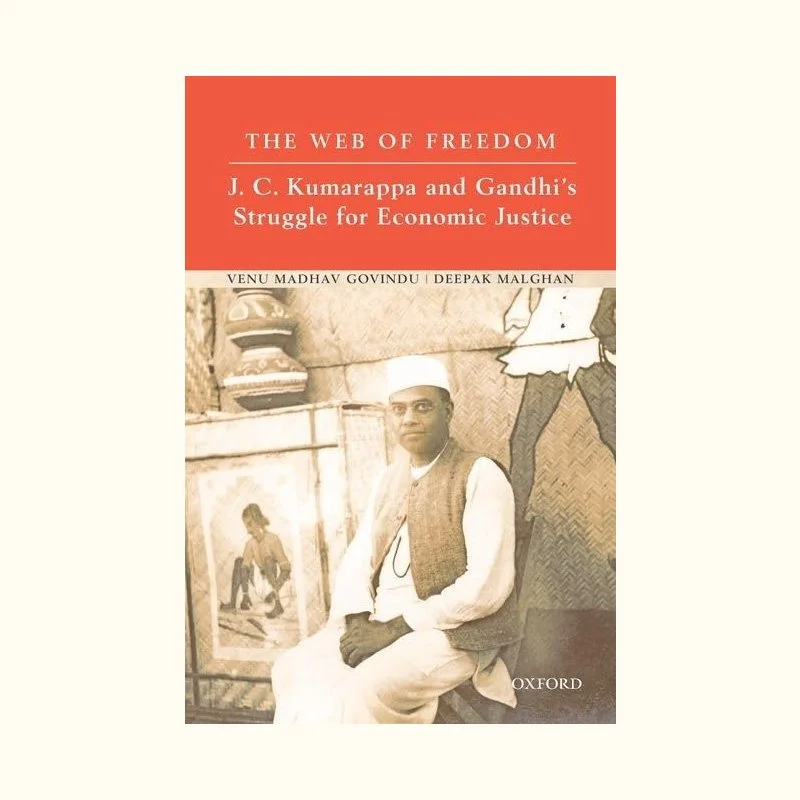
In June 1929, a thirty-seven-year-old chartered accountant dressed in Western clothes walked into the Khadi Bhandar on Kalbadevi Road, Bombay, to be ‘measured up’ for a dhoti. Having never worn one in his life, he had no idea that dhotis came in fixed lengths. Weeks ago, the same man had filed an affidavit to change his name from Joseph Chelladurai Cornelius to Joseph Cornelius Kumarappa. Discarding an alien name and attire, the anglicized professional was rapidly transforming into a dogged fighter for social justice.
Freedom fighter, economic philosopher, environmentalist, and Gandhian constructive worker, Kumarappa (1892–1960) was a man of many parts. He wrote extensively on political economy and simultaneously championed the cause of rural India, both under British Raj and after Independence. If Gandhi’s swaraj was more than political self-rule, it was Kumarappa who gave it economic content and meaning.
A rare thinker who married theory with practice, Kumarappa challenged received wisdom on industrialization and modernity. Based on extensive archival research, this volume presents the fascinating story of his life, work, and ideas that have a strikingly contemporary resonance.
Purchase: Amazon
Reviews:
‘We get a clear picture of how a truly committed Gandhian strove to integrate thought and action, and remained true to his beliefs till the end, even when he found himself isolated in the rapidly changing scenario post independence. Unlike Nehru, he stayed away from power, and unlike Bhave, he refused to say that the time for satyagraha was over, now that India was independent.’- Amit Basole, Economic and Political Weekly