Dinesh C Sharma
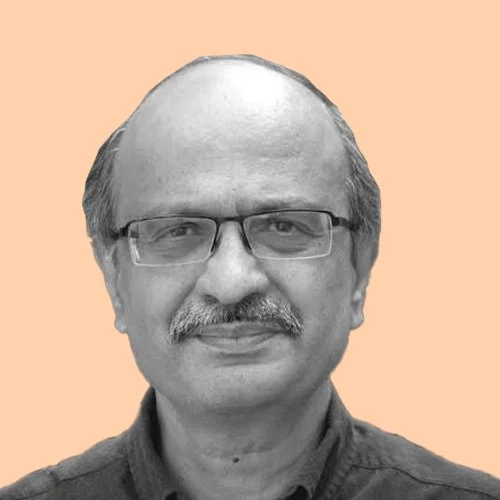
Dinesh C. Sharma is an award-winning journalist and author based in Delhi. In a career spanning close to four decades, he has written extensively on science and technology, climate change, health, environment and innovation for Indian and global media, including The Lancet and Wired. He was previously science editor at Mail Today and managing editor at India Science Wire. In 2008, he travelled to the Arctic and joined an international scientific expedition there to report on climate change. Sharma has been a Jawaharlal Nehru Fellow and also visiting faculty at the Jawaharlal Nehru University, New Delhi and at Ateneo de Manila University, Manila.
NIF Books
A history of how India became a major player in the global technology industry, mapping technological, economic, and political transformations.
The rise of the Indian information technology industry is a remarkable economic success story. Software and services exports from India amounted to less than $100 million in 1990, and today come close to $100 billion. But, as Dinesh Sharma explains in The Outsourcer, Indian IT's success has a long prehistory; it did not begin with software support, or with American firms' eager recruitment of cheap and plentiful programming labor, or with India's economic liberalization of the 1990s. The foundations of India's IT revolution were laid long ago, even before the country's independence from British rule in 1947, as leading Indian scientists established research institutes that became centers for the development of computer science and technology. The “miracle” of Indian IT is actually a story about the long work of converting skills and knowledge into capital and wealth. With The Outsourcer, Sharma offers the first comprehensive history of the forces that drove India's IT success.
Sharma describes India's early development of computer technology, part of the country's efforts to achieve national self-sufficiency, and shows that excessive state control stifled IT industry growth before economic policy changed in 1991. He traces the rise and fall (and return) of IBM in India and the emergence of pioneering indigenous hardware and software firms. He describes the satellite communication links and state-sponsored, tax-free technology parks that made software-related outsourcing by foreign firms viable, and the tsunami of outsourcing operations at the beginning of the new millennium. It is the convergence of many factors, from the tradition of technical education to the rise of entrepreneurship to advances in communication technology, that have made the spectacular growth of India's IT industry possible.
Purchase: Amazon
Reviews:
‘[A] magnificent study that addresses the dearth of scholarship on the history of computing outside the Euro-American context, Sharma's monograph shows the entangled histories of computing in India and America.’ - Science
‘Highly instructive’- Technology and Culture
‘In The World Is Flat, Thomas Friedman introduced Americans to the concept of outsourcing. In The Outsourcer, Dinesh Sharma shows us its fascinating and most improbable history. Sharma’s book should be read by anyone interested in understanding globalization in the twenty-first century.’ - Ross Bassett, Associate Professor of History, North Carolina State University
‘A thoroughly researched and lucidly written chronicle of how India became the world’s preferred destination for outsourcing IT services. A must-read for understanding how Indians became strong in IT and software despite all odds and the role they will play in the digital world of the twenty-first century.’ - Vinod Dham, “Father of Pentium”
‘Dinesh Sharma’s thorough and extensive research gives him a deep understanding of the dynamics of the development of the IT industry in India. He lucidly presents the rise of the IT industry as a fascinating story of the entrepreneurship of young Indians. This book is worth reading for anyone who is participating in the IT revolution in India or wonders why and how it happened.’ - Suhas Patil, Founding President, The Indus
Book Awards:
2016 Computer History Museum Prize
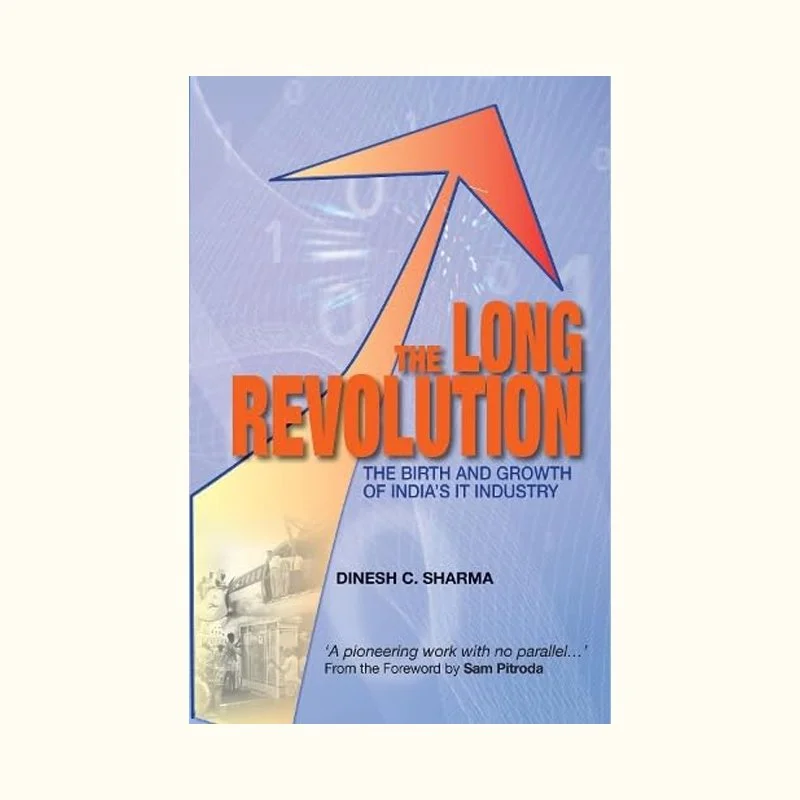
Other books by this author: